

The Solitude of the Lens
Feb 27, 2026
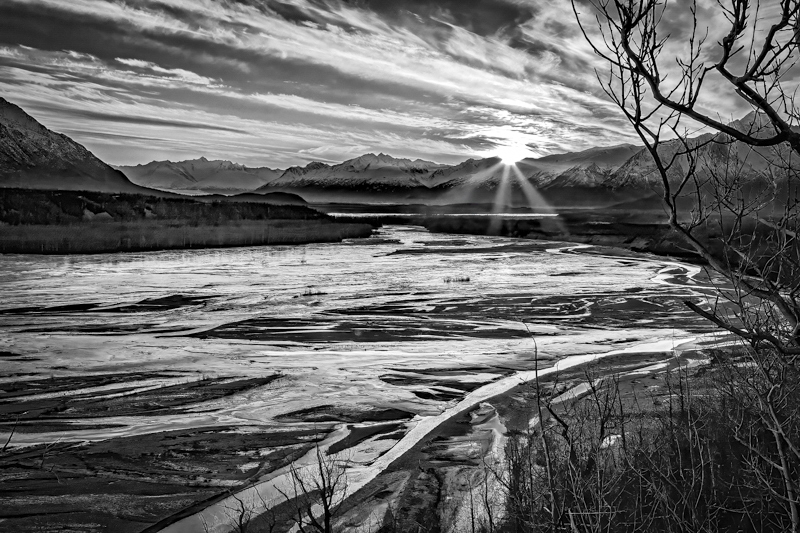
Capturing this black-and-white photograph required me to shoot beside a cliff so dangerous, that one wrong step could have been my last.
I’ve spent countless hours alone in the wilds of Alaska, hiking through forests where the only sounds are the crunch of my boots and the distant call of a raven. This work demands patience—sometimes waiting for hours in the cold for a single moment that may never come. There are days when the only company I have is my dog, and even he seems to understand the quiet focus required.
Out there, far from roads, cell service, or any kind of quick help, every decision matters. A simple misstep on loose rock, a sudden change in weather, or a wrong turn on an unmarked trail can escalate quickly. Hypothermia doesn’t care that you’re chasing golden light. A bear or moose doesn’t know I’m just there for a photograph. A swollen river or slick patch of ice can turn a routine outing into a survival situation. When you’re alone, you are your own backup plan—there’s no one to call out your name if you fall, no one to run for help if something goes wrong.
In the far northern wilderness, that reality is magnified. The distances are greater, the weather turns faster, and help—if it’s even available—can be many hours or days away. Winter hangs on longer, storms roll in without warning, and temperatures can plummet from uncomfortable to life-threatening in what feels like minutes. Up here, a minor mistake doesn’t just mean an uncomfortable night; it can mean you don’t make it home at all.
This solitude isn’t just physical. It’s emotional, too. The world I enter when I’m behind the lens is one of deep observation and reflection. There’s no one to share the immediate thrill of a perfect shot, or the frustration when the weather turns and the light disappears. There’s also no one to witness the close calls—the time you heard branches snap a little too close in the underbrush, or realized you’d been so focused on a composition that you stopped noticing how quickly the temperature was dropping. The stories I witness—an eagle’s silent flight, the resilience of a wildflower in the wind, the distant shape of a bear moving along a ridgeline—are mine alone to carry until I can translate them into images.
Sometimes, the loneliness is heavy. There are moments when I long for someone to see what I see, to feel the awe and humility that comes from standing small beneath a vast sky—and to understand the quiet calculation that’s always running in the background: Where’s my exit route? How much daylight is left? Do I have enough layers if this wind gets worse? Social media can offer a kind of connection, but it’s fleeting and often misses the point. The real experience happens in the quiet, far from any audience, where the risks and rewards are both intensely personal.
Yet, I’ve come to realize that this loneliness is not a void, but a space for something deeper. In the absence of distraction—and with a healthy respect for the dangers that come with it—I find a profound sense of presence. The solitude sharpens my senses and deepens my appreciation for the world’s subtle beauty, but it also sharpens my awareness of my own fragility. Out there, you’re constantly reminded that you are a guest in a landscape that owes you nothing.
It’s in these moments that I feel most alive and connected—to the land, to the animals, and, paradoxically, to the people who will one day see my photographs and, I hope, feel a spark of that same wonder and respect. The images I create are not just pretty scenes; they’re the result of calculated risks, long hours, and a willingness to stand alone in places where comfort and safety are never guaranteed.
Being a nature photographer is a lonely and sometimes dangerous journey, but it’s also a path toward meaning. The images I bring back are invitations—for others to pause, to reflect, and to remember that we are small, that the world is powerful, and that it’s worth protecting. Through my lens, I try to bridge that distance, one quiet, risky, unforgettable moment at a time.